


NewsDetails
Why is my dust collector fan not pulling enough air?
author:yiheng time:2026-03-17 10:51:57 click:68
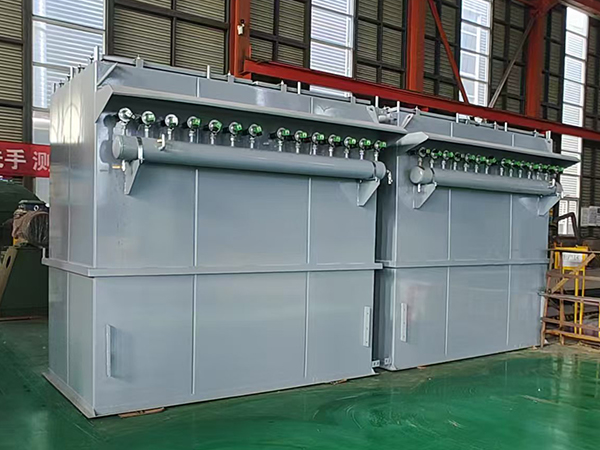
A dust collector fan that is not pulling enough air is a serious issue that leads to poor dust capture at machines,settling of dust in ducts,and potential health and safety hazards.The problem almost always stems from a change in the relationship between the fan's performance and the system's resistance to airflow.When airflow drops,it means the fan is either not able to create its rated pressure,or the system resistance has become too high.
Troubleshooting this issue requires a systematic check of the most common culprits,starting with the simplest and most accessible components.
Check the Filter Media
The most frequent cause of reduced airflow is a blockage in the filters themselves.As dust collects on filter bags or cartridges,it creates a dust cake that resists airflow.This increases the system's static pressure.If the cleaning system is not working effectively,or if the filters have become blinded by fine or sticky particles,the pressure drop will rise until the fan can no longer move its design volume of air.
Inspect the filters for heavy dust buildup that is not being removed by the cleaning cycle.
Check the differential pressure gauge if your system has one.A reading significantly higher than normal is a clear sign that the filters are the problem.
Try manually initiating a cleaning cycle to see if it dislodges the dust.If the airflow improves temporarily,the automatic cleaning controls may need adjustment or repair.
Inspect the Ductwork for Blockages
If the filters are clean and the pressure drop is normal,the restriction may be in the ductwork.Objects,tools,or large accumulations of dust can partially or completely block a duct.
Check hoods and pickups at each machine.A common issue is a damper or blast gate that has been accidentally closed or partially closed.
Look for settling in horizontal duct runs.If the transport velocity is too low in a particular section,dust will fall out of the airstream and accumulate inside the pipe,gradually reducing its cross-sectional area and choking off the airflow.
Listen for unusual sounds at the fan,which might indicate it is struggling against a blockage.
Examine the Fan Itself
The fan is a mechanical device that can develop its own problems.A fan that spins but does not move air is often a sign of a mechanical or drive issue.
Check the direction of rotation.On many fans,if the electrical wiring is incorrect,the motor will run backwards.A fan running in reverse will move a small fraction of its normal air volume.You can check this by looking at the fan housing for an arrow indicating proper rotation direction and observing the wheel.
Inspect the fan wheel(impeller).In some applications,dust can build up on the fan blades,an issue known as"fan wheel icing"or"fouling."This unbalances the wheel and changes its aerodynamic profile,drastically reducing its ability to generate pressure and move air.
Check the drive system.If the fan is belt-driven,worn or loose belts can slip,causing the fan wheel to spin more slowly than the motor.Slow speed means less air.Inspect the belts for wear and ensure they are properly tensioned.
Listen for unusual vibrations or noise,which could indicate a failing bearing that is adding mechanical drag to the system.
Assess the System for Leaks
A significant leak on the clean side of the fan(between the fan outlet and the exhaust stack)can reduce the pressure available to pull air from the system.More commonly,however,large leaks on the dirty side(the ductwork or the collector housing)can rob the system of its pulling power.
Inspect the dust collector housing for open access doors,gaps in the casing,or worn seals.A leak here means the fan is pulling in air from the room instead of from the ductwork serving the machines.
Check all ductwork joints and connections.A large leak in a main trunk line will reduce the vacuum at all downstream pickup points.
Verify Fan Performance Against System Design
Sometimes the system never worked correctly,or conditions have changed.It is possible that the fan is simply too small for the job,or that the system resistance is higher than what the fan was designed for.
Consider whether new machines or longer duct runs have been added to the system since it was installed.The fan may no longer be sized correctly for the increased demand.
Review the original fan curve.If you have access to the fan's specifications,you can measure the static pressure and compare it to the expected airflow.A pressure reading that is much higher than the fan's design point indicates a system restriction.A pressure reading that is much lower than the design point could indicate a fan running backwards,a massive leak,or an impeller problem.
By moving through these checks in a logical order—from the filters,to the ducts,to the fan itself—you can identify the source of the airflow problem and take corrective action.
GB/T 7714:
GAO D H,ZHOU G,LIU R L,et al.CFD investigation on gas-solid two-phase flow of dust removal characteristics for cartridge filter:a case study[J].Process Safety and Environmental Protection,2020,139:247-256.
MLA:
Gao,Danhong,et al."CFD Investigation on Gas-Solid Two-Phase Flow of Dust Removal Characteristics for Cartridge Filter:A Case Study."Process Safety and Environmental Protection,vol.139,2020,pp.247–256.
APA:
Gao,D.,Zhou,G.,Liu,R.,Li,S.,Kong,Y.,&Wang,Y.(2020).CFD investigation on gas-solid two-phase flow of dust removal characteristics for cartridge filter:a case study.Process Safety and Environmental Protection,139,247–256.
 Recommended Products


 Contact Us
—— Hotline:+86 15028642444
—— Email:523474198@qq.com
—— Whatsapp:+8615028642444
—— Address:Longfengdian Village, Waliwang Town, Botou City, Hebei Province


