


NewsDetails
How to calculate the total pressure loss in a baghouse system for fan sizing?
author:yiheng time:2026-03-17 10:50:29 click:103
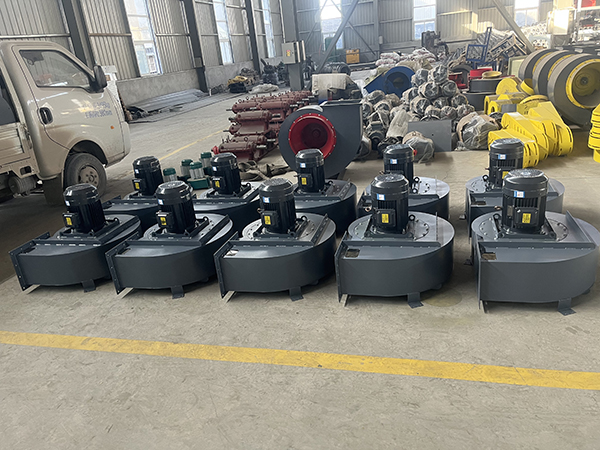
Calculating the total pressure loss(also known as system static pressure)in a baghouse system is essential for selecting a fan with adequate power.The fan must overcome all the resistances to airflow,from the initial capture hood to the final exhaust stack.If you underestimate this value,the fan will not deliver the required air volume(CFM),leading to poor dust capture and potential duct blockages.If you overestimate it,you may waste energy and cause excessive wear on the system.
The total pressure loss is the sum of all individual losses along the path the air takes.It is typically measured in inches of water column(in.w.c.)and is calculated by adding up four primary components.
The Four Main Components of Pressure Loss
The total pressure drop in a baghouse system can be broken down into these categories:
Hood and Inlet Losses
Duct Friction Losses
Baghouse(Filter)Losses
Stack and Outlet Losses
Step 1:Calculate Hood and Inlet Losses
Every point where air enters the system,such as a capture hood or a machine pickup,creates resistance.This loss is often expressed as a function of the velocity pressure in the duct.Different hood designs have different loss coefficients.
To calculate this,you need to know the duct velocity and the hood's entry loss factor.The loss is typically a fraction of the velocity pressure.For example,a well-designed tapered hood might have a loss factor of 0.25,meaning its pressure loss is 0.25 times the velocity pressure.A simple straight pipe opening might have a factor of 0.93.These losses are summed for all hoods on the system,though the fan must overcome the worst-case path.
Step 2:Calculate Duct Friction Losses
As air travels through the ductwork,it rubs against the walls,creating friction.This loss depends on the duct diameter,the air velocity,the length of the duct,and the roughness of the duct material(e.g.,smooth galvanized steel vs.rougher flex hose).Additionally,every fitting—such as elbows,branches,and transitions—adds to the pressure loss.
To calculate these losses,you typically work from a duct friction loss chart or use engineering formulas.You must calculate the friction loss for the longest and most restrictive run from the fan to the farthest hood.This involves:
Summing the equivalent length of all straight duct sections.
Adding the equivalent length for each elbow and fitting(each fitting creates as much resistance as a certain length of straight pipe).
Calculating the friction loss per foot of duct based on the air velocity and duct diameter.
This total duct friction loss is a major component of the system's static pressure.
Step 3:Calculate Baghouse(Filter)Losses
This is often the largest and most variable component of the total pressure loss.It is the resistance created as air forces its way through the filter bags and the dust cake that builds up on them.
Clean Filter Loss:Even brand new,clean bags have some inherent resistance to airflow.This is the initial pressure drop and is typically provided by the bag manufacturer based on the air-to-cloth ratio and the fabric type.
Operational Loss(Dust Cake):As dust accumulates on the bags,it forms a"dust cake"that significantly increases resistance.This pressure drop will rise and fall with each cleaning cycle.For system design,you must use a maximum design pressure drop.This is the highest pressure drop you are willing to tolerate before cleaning is initiated or maintenance is required.A typical design pressure drop for a pulse-jet baghouse might be between 4 and 6 inches w.c.,but it can be higher for some applications.
The manufacturer of the baghouse or the filter bags can provide the expected pressure drop curve for your specific application and air-to-cloth ratio.
Step 4:Calculate Stack and Outlet Losses
Finally,the air must exit the system through the exhaust stack and any weather cap.This creates a final point of resistance.
Outlet Duct Losses:Similar to the inlet ductwork,any straight stack or elbow leading to the fan outlet and up the stack creates friction loss.
Discharge Loss:The point where air exits the stack into the atmosphere also has a pressure loss,often related to the velocity pressure at the discharge point and any cap or rain hood.
Step 5:Sum the Components and Add a Safety Factor
Once you have calculated or estimated the losses for each of the four components,you add them together.
Total Static Pressure(SP)=Hood Loss+Duct Friction Loss+Baghouse Loss+Stack Loss
This total represents the resistance the fan must overcome at your design airflow.
Because there are always variables in installation and operation(e.g.,slightly rougher ductwork,unexpected bends,higher future dust loading),it is a standard engineering practice to add a safety factor to this calculated total.A common safety margin is 10%to 20%.
For example,if your calculated total pressure loss is 8.0 inches w.c.,you would select a fan capable of delivering the required CFM at a static pressure of 9.0 to 9.6 inches w.c.This ensures the fan has enough power to handle real-world conditions and maintain performance as the filters begin to load.
GB/T 7714
KUHLMAN J R,JOHNSON T R.Baghouse system design based on economic optimization[J].Journal of Environmental Engineering,1992,118(3):456-472.
MLA
Kuhlman,John R.,and Thomas R.Johnson."Baghouse System Design Based on Economic Optimization."Journal of Environmental Engineering,vol.118,no.3,1992,pp.456–472.
APA
Kuhlman,J.R.,&Johnson,T.R.(1992).Baghouse system design based on economic optimization.Journal of Environmental Engineering,118(3),456–472.
 Recommended Products


 Contact Us
—— Hotline:+86 15028642444
—— Email:523474198@qq.com
—— Whatsapp:+8615028642444
—— Address:Longfengdian Village, Waliwang Town, Botou City, Hebei Province


