


NewsDetails
How to choose the right pulse control instrument for my baghouse?
author:yiheng time:2026-03-17 10:40:35 click:142
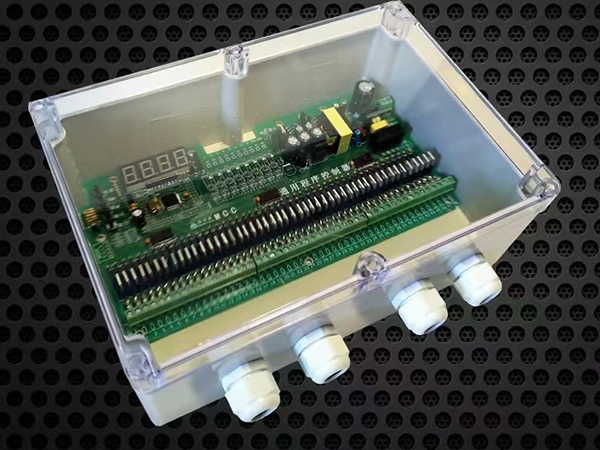
Choosing the right pulse control instrument for your baghouse is a decision that directly impacts your system's efficiency,operating cost,and filter life.The controller is the brain of the cleaning system,dictating when and how often compressed air pulses are fired to clean the filter bags.Selecting the wrong type can lead to wasted energy,poor dust release,or premature bag failure.The process involves understanding the core control philosophies,matching the controller to your system's size and environment,and considering the valve technology it will command.
Step 1:Choose Your Core Control Philosophy
The first and most fundamental decision is how the controller will decide when to clean.There are two primary approaches,each with distinct advantages.
1.Timer-Based Control(Simple Timer)
A timer-based controller is the simpler of the two.An operator sets a fixed time interval(e.g.,the valve is open for 0.1 seconds every 5 minutes),and the controller fires the pulses at that exact interval,regardless of whether the bags actually need cleaning.
How it works:It typically has two main adjustable parameters:the time the valve is open(pulse duration)and the time the valve is closed(the interval between pulses).
Advantages:It has a lower initial cost and is very simple to set up and understand.It works well for applications with predictable and consistent dust loading.
Disadvantages:It can be inefficient.If the interval is set too short,it wastes compressed air and over-cleans the bags,shortening their life.If set too long,the pressure drop across the system rises,reducing airflow and potentially blinding the bags.Finding the"just right"setting often involves trial and error.
2.Demand-Based Control(On-Demand/Differential Pressure Control)
This is a more sophisticated and efficient approach.The controller continuously monitors the differential pressure(ΔP)across the filter bags using a pressure sensor or transmitter.
How it works:You set a high-pressure limit and a low-pressure limit.When theΔP reaches the high set point(indicating a heavy dust cake),the controller initiates a cleaning sequence.It continues to pulse until theΔP falls to the low set point,at which point cleaning stops.
Advantages:This is the most energy-efficient and bag-friendly method.Bags are cleaned only when necessary,which significantly reduces compressed air consumption and minimizes fabric wear,extending bag life.It maintains a stable and optimum pressure drop,ensuring consistent ventilation and filtration efficiency.
Disadvantages:It has a higher initial cost due to the need for a pressure sensor and more complex control logic.However,this cost is typically recovered quickly through energy and maintenance savings.
Step 2:Match Controller Scale to Your Baghouse
Once you've chosen the control philosophy,you need to ensure the controller can physically handle the size and complexity of your baghouse.
Number of Outputs(Valve Rows):Controllers are designed to operate a specific number of solenoid valves.You must count how many rows of bags or valves your system has.Simple controllers might handle 10-20 outputs,while modular systems can be expanded to control 96,192,or even more valves by linking multiple units or using a master controller setup.For very large baghouses with more than 40 rows,a master controller may be needed to supervise several smaller sequence controllers,managing them in groups or"modules".
System Complexity:For a small,standalone dust collector with a few rows of bags,a compact,all-in-one controller is perfectly adequate.For a massive,multi-compartment baghouse,you will need a scalable,modular system that can be configured for your exact layout and can potentially integrate with a plant-wide Distributed Control System(DCS)or PLC.
Step 3:Consider Environmental and Operational Factors
The physical environment where the controller and its associated valves are installed plays a crucial role in the selection process.
Environmental Exposure:Standard controllers and their enclosures are suitable for general-purpose indoor use.However,if your baghouse is outdoors,in a dusty area,or subject to washdowns,you will need a controller with a higher Ingress Protection(IP)rating(e.g.,IP65)to resist dust and moisture.
Hazardous Locations:If you are collecting combustible dust or operating in an area with flammable gases,you may require a controller and components rated for hazardous locations(e.g.,Class I or Class II).Some advanced controllers are specifically designed and certified for these environments.
Valve Configuration:Your choice of controller may also be influenced by the type of pulse valves you use or prefer.A key decision is between integral pilot and remote pilot valves,which relates to where the solenoid is located.
Integral Pilot Valves:The solenoid is mounted directly on the valve body.This creates a compact unit that is simple to install.It is ideal for smaller systems or where space is tight.
Remote Pilot Valves:The solenoid is installed remotely and connected to the main valve via tubing.This allows the sensitive solenoid to be placed in a protected,controlled environment away from high heat,heavy dust,or hazardous conditions.This configuration is often preferred for large-scale,high-temperature,or dangerous applications.
Step 4:Look for Value-Added Features
Modern controllers offer features beyond basic timing that can provide significant benefits.
Diagnostics and Monitoring:Advanced controllers can monitor more than justΔP.They can track pulse counts,header pressure,and run time.This data can be used to detect failing diaphragms,leaking solenoids,or even broken bags before they cause a major problem,enabling predictive maintenance.
Communication Protocols:If you need to integrate the baghouse with a central control room,look for controllers that support industrial communication protocols like Modbus,Ethernet/IP,or Profibus.
Alarm Capabilities:On-demand controllers often have programmable alarms.A high-pressure alarm can alert you to blinded bags,while a low-pressure alarm can signal a major leak or broken bag.
In summary,the right pulse control instrument balances cost,efficiency,and scalability.For a simple application with steady dust loads,a basic timer may suffice.For most operations seeking to optimize energy use and bag life,a demand-based controller is the superior choice.The final decision on the specific model will then be driven by the number of valves you need to control,the environmental conditions of your site,and your desire for advanced diagnostics and communication.
GB/T 7714:
COOPER D A,ALLEY U.Selection of Pulse Jet Controllers for Baghouse Dust Collectors:Principles and Practice[M]//Air Pollution Control:A Design Approach.4th ed.Long Grove:Waveland Press,2011:589-602.
MLA:
Cooper,David A.,and Urmila Alley."Selection of Pulse Jet Controllers for Baghouse Dust Collectors:Principles and Practice."Air Pollution Control:A Design Approach,4th ed.,Waveland Press,2011,pp.589–602.
APA:
Cooper,D.A.,&Alley,U.(2011).Selection of pulse jet controllers for baghouse dust collectors:Principles and practice.In Air pollution control:A design approach(4th ed.,pp.589–602).Waveland Press.
 Recommended Products


 Contact Us
—— Hotline:+86 15028642444
—— Email:523474198@qq.com
—— Whatsapp:+8615028642444
—— Address:Longfengdian Village, Waliwang Town, Botou City, Hebei Province


