


NewsDetails
How to calculate the size of a baghouse dust collector for my plant?
author:yiheng time:2026-03-17 10:53:07 click:190
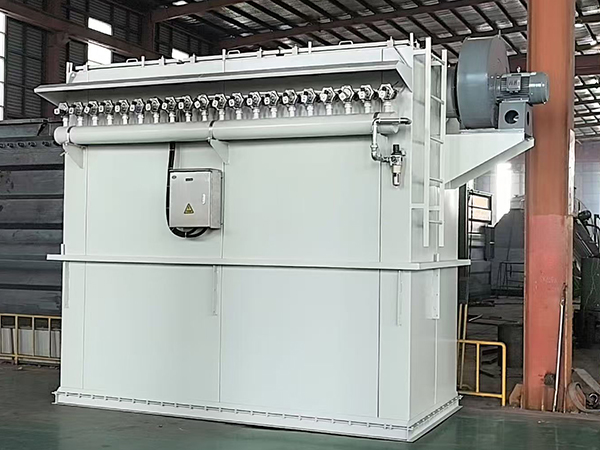
Sizing a baghouse dust collector for your plant is a systematic engineering process that ensures you have enough filtration capacity to handle your dust load while maintaining efficient operation.An undersized system will clog rapidly and fail to capture dust,while an oversized system wastes capital and floor space.The process involves calculating your required airflow,selecting an appropriate air-to-cloth ratio,determining the necessary filter area,and finally calculating the physical size of the collector itself.
Step 1:Calculate Your Total System Airflow(CFM)
The first and most critical step is determining the total volume of air your system must move,measured in cubic feet per minute(CFM).This is the sum of the air required at every dust pickup point in your facility.
Identify All Collection Points
Begin by listing every machine,hood,and process that will connect to the dust collection system.This includes equipment like saws,grinders,mixers,conveyor transfer points,and bin vents.
Determine CFM Requirements for Each Point
Each dust-generating point has an industry-standard airflow requirement.For hooded pickups,you can calculate the required CFM using the formula:
CFM=Face Velocity(fpm)×Hood Area(ft²)
For most industrial dusts,the recommended face velocity at the hood is 100-200 feet per minute.However,many machines come with manufacturer-specified port sizes.If you know the duct diameter and the required conveying velocity for your material,you can determine CFM using standard duct sizing charts.
Classify Primary vs.Secondary Sources
Not all equipment runs continuously.Identify which sources are primary(run constantly)and which are secondary(run intermittently).Size your system for the heaviest use scenario where all primary sources and the largest combination of secondary sources operate simultaneously.A good rule of thumb is to add a 10%safety margin to your total CFM to accommodate future expansion and ensure adequate performance.
Step 2:Select the Air-to-Cloth Ratio
The air-to-cloth(A/C)ratio is the amount of air passing through one square foot of filter media.It is the single most important design parameter for a baghouse.
Understanding the Ratio
The A/C ratio is expressed as a relationship,such as 3.5:1,meaning 3.5 cubic feet of air per minute passes through each square foot of fabric.A lower ratio means more filter area for the same airflow,which generally extends bag life and reduces pressure drop.
Selecting the Right Ratio
The appropriate ratio depends on your dust type,concentration,and the baghouse cleaning method.
Reverse Air Baghouses:1.75:1 to 2.50:1
Shaker Baghouses:2.0:1 to 2.50:1
Pulse Jet Baghouses:3.25:1 to 4.00:1.For pulse jet systems handling typical industrial dusts,the ACGIH(American Conference of Governmental Industrial Hygienists)recommends 4:1 to 6:1.
For fine or sticky dusts(like carbon black or cement),you must use a more conservative(lower)ratio.For coarse dusts(like wood chips),a higher ratio may be acceptable.Industry sources like the EPA provide detailed equations that factor in temperature,particle size,and inlet dust loading to calculate a precise gas-to-cloth ratio.
Step 3:Calculate the Total Filter Cloth Area Required
Once you know your total system CFM and your target air-to-cloth ratio,you can calculate the total square footage of filter fabric needed.
Formula:
Total Filter Area(ft²)=Total Airflow(CFM)÷Air-to-Cloth Ratio
Example:
If your system requires 10,000 CFM and you have selected an air-to-cloth ratio of 4:1 for a pulse-jet collector:
10,000 CFM÷4=2,500 ft²of total filter cloth area
Step 4:Determine Bag Dimensions and Quantity
Now you must translate the total filter area into a specific number and size of filter bags.The standard formula for the surface area of a single cylindrical bag is:
Area per Bag(ft²)=π×Bag Diameter(ft)×Bag Length(ft)
Since bag diameter is usually measured in inches,the formula is often written as:
Area per Bag(ft²)=(Bag Diameter(in)×π×Bag Length(ft))÷12
Or using the common calculator approach:
(Bag Diameter×Bag Length×π×Number of Bags)÷144=Total Square Feet
(Note:This formula uses inches for diameter and length and 144 to convert square inches to square feet.)
Example:
A pulse-jet baghouse has 500 filter bags,each 5 inches in diameter and 10 feet long.
Area per bag=π×(5/12 ft)×10 ft=13.09 ft²
Total filter area=500×13.09=6,545 ft²
To determine how many bags you need,divide your total required filter area(from Step 3)by the area of a single bag(using your chosen diameter and length).
Number of Bags=Total Filter Area÷Area per Bag
Step 5:Consider Can Velocity and Physical Layout
Beyond filter area,you must ensure the physical housing is sized correctly to prevent"re-entrainment,"where dust blown off the bags during cleaning gets sucked back onto them instead of falling into the hopper.
Can Velocity
Can velocity is the upward speed of air between the bags.If it is too high,it will carry dislodged dust back to the bags.For pulse-jet collectors,typical can velocity should be between 200 and 400 feet per minute.
Formula:
Can Velocity(fpm)=Air Volume(CFM)÷Open Area(ft²)
Open area is the cross-sectional area of the baghouse housing minus the area occupied by the bag bottoms.This calculation ensures you have adequate space between bags and between bags and the housing walls.
Step 6:Account for Pressure Drop
Your final baghouse size will also affect the system's static pressure loss,which your fan must overcome.Pressure drop across a clean system will be low,but as dust cakes on the bags,resistance increases.A well-designed system maintains differential pressure in the range of 3 to 6 inches of water column.
If your pressure drop exceeds this range,it indicates your collector may be undersized,your cleaning system is inadequate,or your bags are blinding.This is where proper sizing intersects with operational efficiency—a correctly sized baghouse will maintain stable pressure drop with reasonable compressed air consumption for cleaning.
Summary Checklist for Baghouse Sizing
Calculate total CFM from all collection points(add 10%margin)
Select air-to-cloth ratio based on dust type and cleaning method
Compute total filter area required(CFM÷A/C ratio)
Choose bag dimensions and calculate number of bags needed
Verify can velocity is within 200-400 fpm range
Ensure pressure drop will be manageable(3-6"w.c.typical)
GB/T 7714:
Löffler F.Dust collection with bag filters[M].Berlin:Springer,1988.
MLA:
Löffler,Frank.Dust Collection with Bag Filters.Springer,1988.
APA:
Löffler,F.(1988).Dust collection with bag filters.Springer.
 Recommended Products


 Contact Us
—— Hotline:+86 15028642444
—— Email:523474198@qq.com
—— Whatsapp:+8615028642444
—— Address:Longfengdian Village, Waliwang Town, Botou City, Hebei Province


